
Oak Brook Park District
Exercise routines which may involve light weight lifting, walking, elliptical, treadmill, row machine, stationary bikes, and more.

Our program is designed to support growth of our students into adulthood.
Offer a vocational opportunityOur program is designed to support growth of our students into adulthood. Transition Students and High School students, as early as their junior year, have vocational and life skills programs created through the collaboration of the student’s parents, school team and placing district to develop realistic post- school goals in accordance with the IEP transition plan, to impart the skills and strategies necessary to enable the student to be as independent as possible with optimal quality of life. Assessments, interviews, and checklists completed collaboratively by the team, students and parents provide information related to meaningful life skills, employment interests/ preferences, recreation and leisure interests and planning for a future of independence. The program is then tailored to the students interests and experience, developmental level/ capacities and personal strengths. In accordance with IDEA requirements, the program addresses the five components of transition planning: education/ vocational training, employment, independent living, recreation and leisure, and community integration.
We believe that all students have the right to access a rich academic curriculum appropriate to their individuals learning style and developmental levels while also supporting functional skills and vocational job skills. We are committed to providing students with a safe and nurturing environment in which they can learn how to integrate into their communities. Our approach in teaching through a relationship-based model allows for students to connect and make meaning of the life skills being taught through academics, daily living tasks, vocational training, and rec/leisure experiences. Program activities take place through forming relationships in the community, work sites, and other dynamic locations. We focus on the process and embrace all our student’s interests, personal strengths and developmental levels/capacities. We provide hands-on experiences on site such as micro-business skills, daily living skills, exercise, art projects, and other integrated community activities.
Our team of trained support staff facilitates the process of self-regulation and teach functional skills so students can work as independently as possible. Classroom teacher, Classroom Assistant, therapists and 1:1 teacher assistants (job coaches) support on vocational trips, on job sites and throughout the school day. This supports the generalization of skills across a variety of people and contexts. As students progress, they are met with the opportunity to determine job preferences and learn to work with growing independence, while staying calm/regulated and engaged, as they make contributions in the workplace and in other public environments. The team partners with parents throughout a student’s time within the Transition program to plan for post- 22 with monthly or bi-weekly parent meetings spent looking into potential jobs, setting up interviews, visiting potential day programs and having programs out to Soaring Eagle to observe and plan for students to attend.
We help produce young adults who can…
Transition students and high school students, as early as their junior year, have opportunities to explore vocational interests and skills both on site and within the community. SEA has established partnerships with businesses in the community and is committed to seek new partnerships as the need arises, since all vocational opportunities are individualized for each student based upon each student’s individual developmental levels, student interests and personal strengths. There are designated on site job coaching in the area of cleaning and organizing, office work, working at the school store, managing the school Library, and working a Coffee Cart for employees. There are offsite community experiences that may include, organizing, light office work and cleaning at a law office, gardening and planting and upkeep of grounds moving mulch/dirt at We Grow Dreams with students completing a timesheet and receiving a paycheck with opportunity to be hired after graduation, stocking and assisting customers at Walgreens and Pet Supplies Plus and preparing for customers, delivering food to tables and cleaning at The Patio Restaurant. Life skills experiences for meal planning/cooking, hygiene, doing laundry, managing money, self-advocacy, preparing a resume/portfolio, interviewing skills, etc. can be practiced in SEA’s Mock apartment as well as in the community. Our recreation/leisure program allows students to become intrinsically motivated in a healthy lifestyle by providing fun experiences.
Transition program activities will vary from student to student. While such activities among the general population are learned through trial-and-error, teens and adults with autism need significant training and practice with the calming/coping, social and communication skills necessary to perform in employment situations. Providing community-based, “real world” social, vocational, and life experiences are perhaps the most critical learning opportunities that impact the potential for ongoing independence and quality of life for an individual with autism and that is the beauty of individualized vocational training because each student presents with a different individual profile making each experience meaningful to them in their own way. For example, a current student who moved up into our transition program a few years ago, initially expressed significant reservations about discussing off-site work environments- uncertain about what to anticipate and how to execute tasks in such settings and was fairly hesitant. Following ongoing discussions about the nature of workplaces, job responsibilities, and task execution, the student began expressing interest. On the first workday, the student conscientiously familiarized himself with Pet Supplies Plus, acquainting himself with the surroundings, the work environment, and the product placements. Fast forward to his recent graduation and preparation to return to his home school district transition program, student proactively assisted his peers in finding product placements when needed. Additionally, when approached by customers seeking item locations, he promptly provided information about the aisle where the desired product can be found. As a result, with support from his SEA team, he pursued vocational opportunities at more worksites and upon leaving SEA to transition back to district, secured a paying position at a Pet Supplies in his hometown, due to his strong work ethic recognized by the manager at the Lombard location.
Mariano's serves as a primary local grocery store for our school’s shopping needs, particularly for school-related groups and the student-operated school store. Students are tasked with compiling a grocery list. Upon arrival at Mariano's, the students are organized into pairs, each with their own grocery list. It becomes the responsibility of the students to navigate the store, locating the items on their respective lists, with support offered by SEA staff. Over time, students have demonstrated a level of independence during grocery shopping excursions, resulting in minimal direct assistance from SEA staff. Consequently, they are entrusted with their own grocery list, a tax-exempt form, and a school credit card, encouraging autonomy and problem-solving skills. One of our students was employed at both Walgreens and Pet Supplies Plus, where the student initially undertook the role of a stocker. In the initial stages of employment, the student dedicated effort to acquainting himself with the specific locations of various products. While he developed a comprehensive understanding of the product placements, there were instances where he faced difficulty in locating a particular item. At that time, he would return the product to the cart without seeking assistance. However, through the implementation of visual aids and introductions to individuals available for assistance at the worksite, significant progress has been made. The student now proactively seeks out designated individuals when faced with challenges in stocking, demonstrating an increased capacity for effective problem-solving and communication.
All transition students have measurable goals on their Individual Education Plan that relate to community life skills and vocational skills, as well as, “soft” foundational skills that make community experiences successful including goals for staying calm and regulated, sustaining engagement/interaction, responding to interactions of others, staying reciprocal, waiting when others say wait and following safety rules in the community. The classroom team collects data on each student in all goal areas daily and weekly, with data reported quarterly on report cards and as benchmarks on the Individual Education Plan shared with parents and placing school districts. The team meets with parents monthly giving verbal feedback and opportunity to support families in their thinking about their child’s future and their hopes for their child’s preparation and success.
Outcomes vary among students but expected short term outcomes include: increased opportunities for students to explore a diverse range of job sites, ability to offer individualized exposure to job sites of particular interest to each student, opportunities to have repeated visits during a week, flexibility to have multiple students out in the community in smaller groups on a daily basis, ability to tailor visits to meet the individual learning and sensory profile of each student. Long term expected changes include: increased ability to stay calm and regulated adapting to the ever changing stimuli and expectations within an environment, ability to respond to others and engage in meaningful interaction, ability to follow directions, rules and schedule, learn independence and increased self-esteem, develop an understanding of true/authentic work environments and work ethic, become a valuable member of the greater community and prepared for adult life outside of the SEA school experience. A former graduate that aged out at 22 years old, after being at SEA 7 years since initial placement in our High School program, continues to be employed at We Grow Dreams (the greenhouse vocational experience initially explored through our vocational program). Another student that reintegrated back to his home school district for high school, immediately joined his new peers at a community vocational experience in an assisted living facility successfully cleaning and vacuuming, transferring learned skills after being supported for a similar experience while at our school. We are preparing students for their lifetime- a lifetime filled with meaning, purpose and independence with hopes to expand their job opportunities and prepare them for workplace success.
Our Transition students are always looking for new opportunities to help enhance their job and vocational skills in the community if you or your company has a need for some extra help a couple hours a week please let us know!
Fill in the form below and we’ll be in touch.
Exercise routines which may involve light weight lifting, walking, elliptical, treadmill, row machine, stationary bikes, and more.

Students restock returned merchandise and move displays.

Students participate in weekly grocery shopping trips, monthly recreation/leisure trips and monthly opportunities to eat in the community at farmer’s markets, restaurants and food courts.
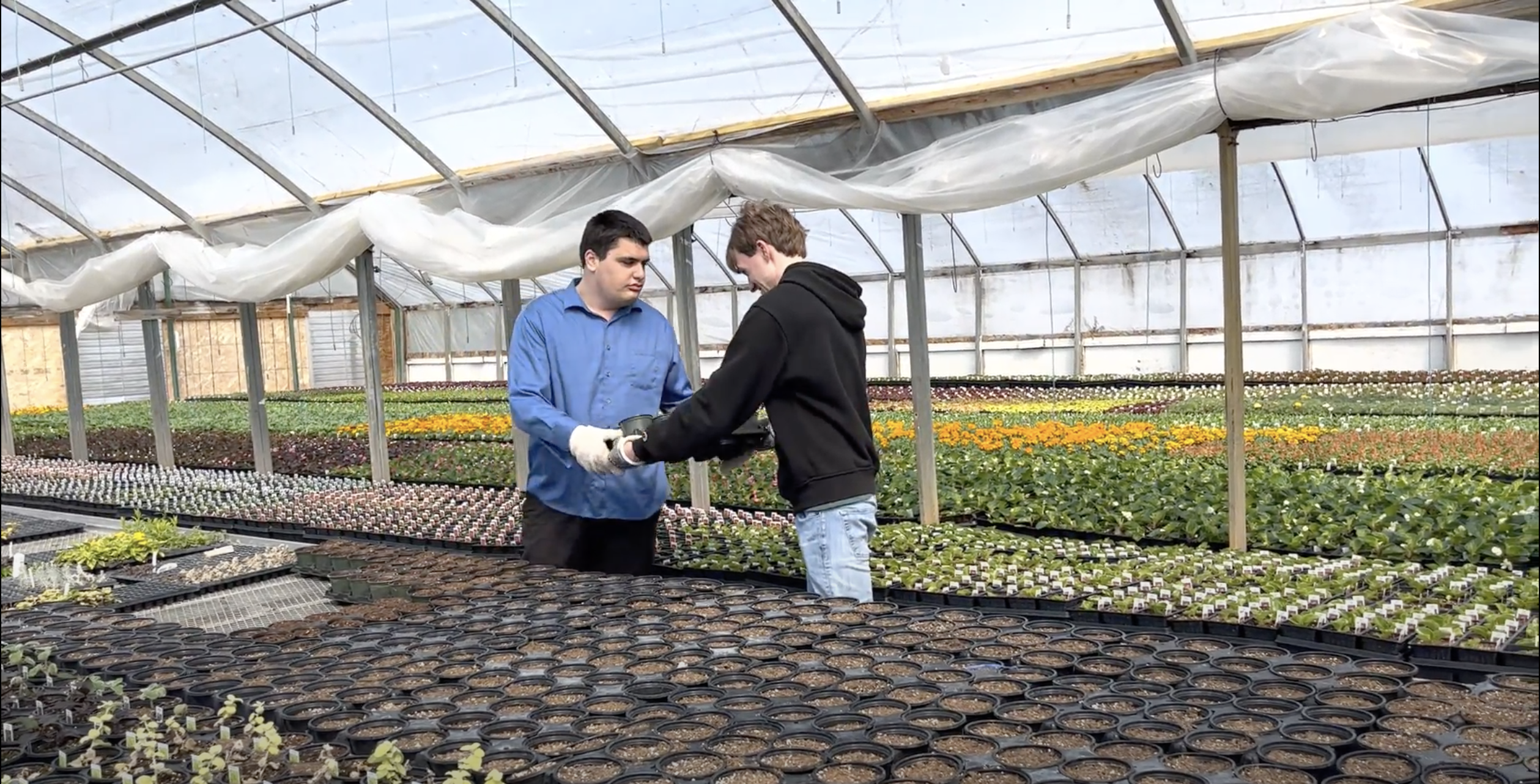
Students dress in uniform and engage in general garden maintenance such as watering, cleaning/organizing and filling and moving planters/pots.

Students shelve items, check expiration dates of products, and practice reporting to a manager for shift assignment.

Students wear a uniform, partake in cleaning/wiping tables and high chairs, stock paper products and deliver food orders to customers.