
From the rhythm of the school day to our purpose-built facility, the research behind our program, and the activities that bring students together.
Students have an individualized schedule that supports their developmental levels, therapeutic goals and natural interests. Students participate in core academic subject areas of Literacy, Math, Science, Social Studies, and Social Emotional learning curriculum on a daily basis, presented in a meaningful and dynamic manner, related to their developmental level and individual profile.
Students receive Speech Language Therapy, Occupational Therapy, and Social Work/Counseling based on their IEP needs. Theoretical thinking from each of these related services are deeply rooted within SEA curriculum, activities and interactions. Students may participate in fine arts (music & art), vocational/life skills, and P.E. as part of their therapeutic plan.
Description of daily activities. Times and activities may vary among classrooms and students.
Group based engagement related to welcoming peers to school, making announcements for the day and taking attendance. Students are encouraged to interact and initiate ideas with staff and peers. Yoga, rhythmic movement and calming music are offered as a calm, grounding way to start the day.
Dynamic and multi-sensory, teacher-directed lessons based on current curriculum, themes, and individual student developmental levels. Goals are established through the IEP process and include, Literacy, Math, Science, and Social Studies. Teachers group students based on their learning levels and also individual profiles to best support peer interactions and learning.
Students receive related services such as speech therapy, occupational therapy and/or social work/counseling based on their IEP needs. Therapy services may be provided one on one within the therapy room or as part of a group/integrated therapy during a classroom activity or experience. Students are supported by the DIR® Specialist facilitating work in developmental goal areas and the Social Emotional Learning Curriculum.
Students work one on one with their Teacher Assistant and/or their teacher. During individual academic stations, students are engaged in individualized lessons generated by the teacher based on full scope and sequence curriculum. These goals reflect the student’s individual IEP goal areas for Literacy and Math, while also keeping in mind the accommodations and considerations specific to his or her individual profile.
Students bring lunch from home. The therapeutic staff facilitates peer interactions during lunch. Self-help and daily living skills are promoted for independence. Snack time opportunities are offered to students throughout the day.
Peer play and interaction is facilitated by the teacher and teacher assistants during indoor and/or outdoor activities and clubs. Clubs are developed as students express interest and want to explore an activity more (dance club, science club, computer club, cooking club, and more are currently offered).
Our Social Emotional Learning (SEL) Curriculum integrates Developmental Language and DIR® based thinking, and based on the Illinois Learning Standards, by utilizing literature from our SEA Social Studies and Literacy Curriculum and other books, to support social emotional learning skills.
Students participate in Friends Groups with SEA staff supporting the students’ individual regulatory needs, while facilitating peer connections within groups, based on students’ common interests, and may include Cooking group, Theater Group, Dance Group, as well as others, as interests change.
Students participate in small group experiences tailored to their individual needs and interests in the areas of music and art with the support of their teacher assistant.
Students participate in small group activities, facilitated by SEA staff and P.E. Teacher, supporting sensory processing, motor planning, sports skill development and team cooperation.
Students are supported to choose and perform jobs within their classroom or school environment. Jobs are offered based on each student’s developmental level, individual profile and natural interests. Transition students are provided with a safe, nurturing and individualized environment in which they can learn how to integrate into their communities, allowing students to connect and make meaning of the life skills being taught through academics, daily living tasks, vocational training, and rec/leisure experiences. Program activities take place through forming relationships in the community, work sites, and other dynamic locations.
High School students are supported in working on functional skills to prepare for adulthood in meaningful ways throughout the school day. The teacher and therapists work together to provide opportunities for building upon employability skills, independent living skills, self-care skills and social and communication skills through cooking groups, social emotional friends groups, school store shifts, daily end of day jobs, and community outings. Self-advocacy, independence, and self-determination paired with the interests, strengths, and developmental levels guide the vocational programming for each individual student.
Group engagement opportunity for students to come together to summarize their activities of the day, review the calendar, and say goodbye to peers and staff. Group yoga, rhythmic movement and calming music are offered to support a calm transition home.
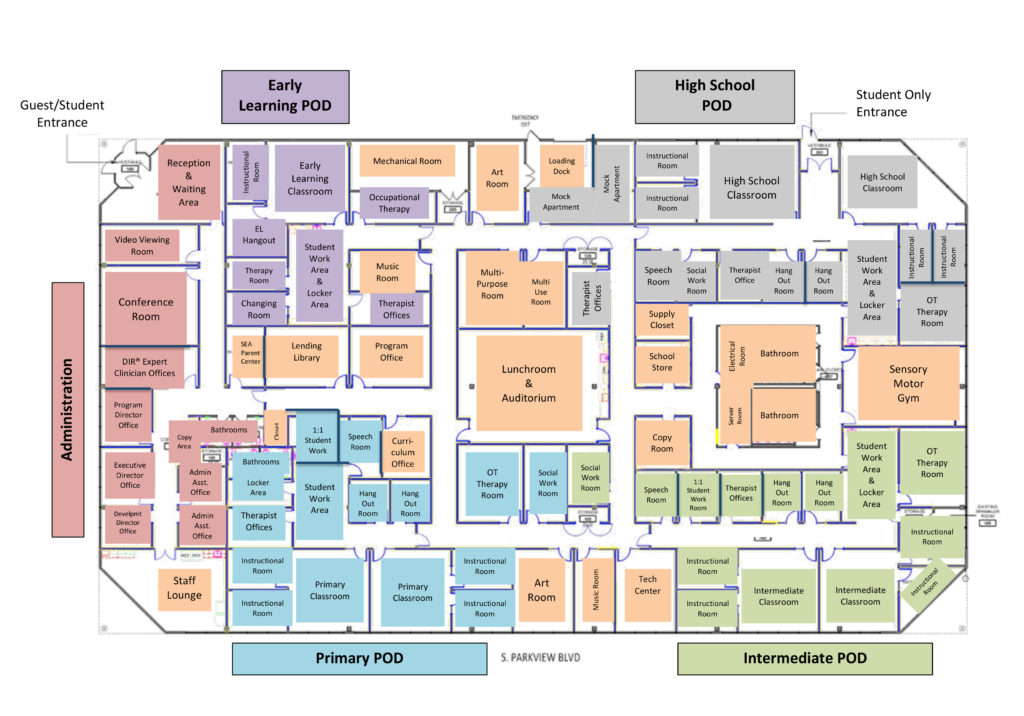
Soaring Eagle Academy relocated to a single tenant, 25,240 square foot spacious building, at 800 Parkview Blvd in Lombard, Illinois in January 2016. Set on a picturesque property with fenced-in outdoor play areas for elementary and high school/transition age students, the Academy is a calm and nurturing environment.
It has been carefully designed by SEA’s expert staff and HORN Design architects to support our student’s individual sensory motor, auditory and visual processing needs and SEA’s cutting edge, one-of-a-kind teaching model. It is an optimal learning environment, which respects student’s individual interests and sensitivities.
Note for the site editor — delete this block before publishing. The floor plan shown is the January 2017 version — it is the only floor plan in the Media Library. Upload the most recent floor plan, then paste its URL into the image marked PASTE_NEW_FLOOR_PLAN_URL in the code.
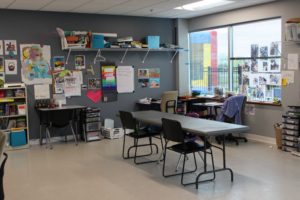


Pod Community Design is utilized, offering students similar in age (Primary, Intermediate, High School and Transition) their own safe and nurturing social and educational environments to explore and learn in. Led to by color-coded hallways, each pod community includes a classroom, instructional rooms, sensory and treatment rooms for related services of Speech Language Therapy, Occupational Therapy and Social Work/Counseling. Collaborative teams including the classroom Special Education Teacher, Classroom Assistant, 1:1 Teacher Assistants, DIR® Specialist, Speech Language Pathologist, Occupational Therapist, Social Worker/Counselor, Regulatory Crisis Responder, DIR® Expert Clinician/Trainers, with other support staff based on student IEP needs, support students within their pods.
Classrooms with individual student work areas and adjoining instructional rooms utilizing Smart Board technology, offer multi-sensory, experiential learning and social environments for students. Students explore classroom and Pod areas encouraging symbolic play, building/creating, listening, dramatic play, sensory motor integration, and self-calming/regulation. Academic curriculum content areas of literacy, math, science, social science, art, music and physical education are available for student-guided learning and semi-structured, teacher-directed learning. Students are actively engaged in interactive and meaningful learning according to their age, interests, and level of development.
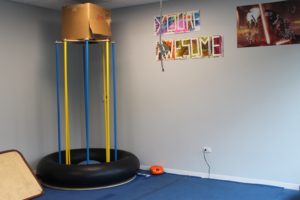
Sensory Motor Gym is available to students in each pod, equipped with suspended equipment and other multi-sensory materials to promote sensory and motor modulation and integration within each pod. Activities that develop and support tactile (how we process the sense of touch), vestibular (how we process movement of the body under gravity), proprioceptive (how we process information from our muscles and joints), motor planning (how we plan, sequence and execute a novel action), and visual-spatial processing (how we understand and process what we see) are critical for student learning, interaction and daily living skills. A large Gym is available to students for Physical Education.
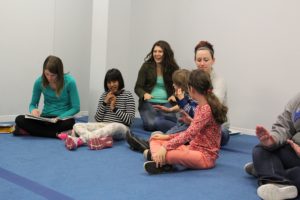
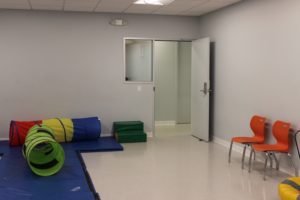
Floortime/Sensory Rooms are available to students and staff for individual, dyad and small group interactions, to develop and support regulation, mutual engagement, language and communication, problem solving, symbolic play, abstract and critical thinking, motor planning, peer interactions and expression of ideas.
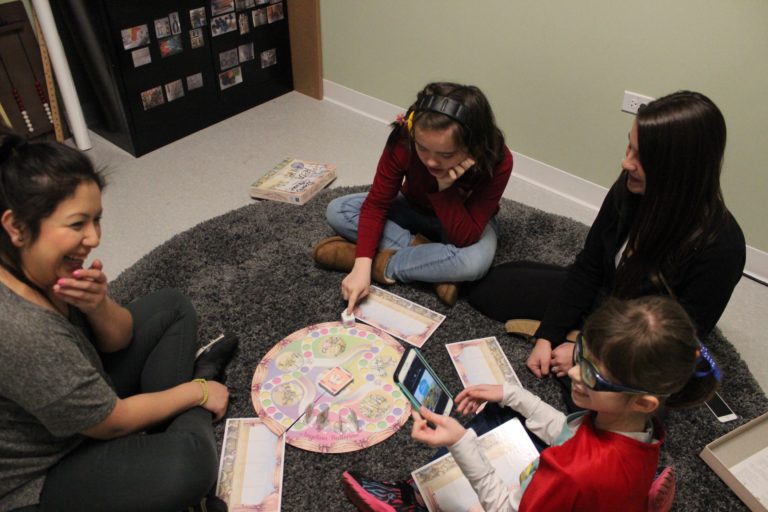
Friendship/Peer Groups as part of the Social Emotional Learning (SEL) curriculum, for developing friendships and peer interactions through activities of common interest. Staff supports the students’ individual regulatory needs while facilitating peer interactions. Groups are ever changing according to student interests, currently including cooking, trains, bubbles, sensory, dance, drama, sports, board games and girls/boys groups are supported within multiple rooms throughout the site.
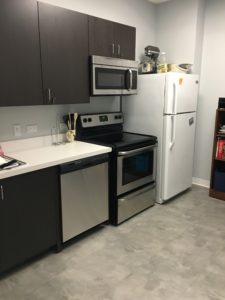
Mock Apartment serves as a dynamic hands-on environment, offering high school and transition students opportunity to practice natural and meaningful experiences of daily living, that include cooking, cleaning, and washing clothes,… all preparing them for adulthood.
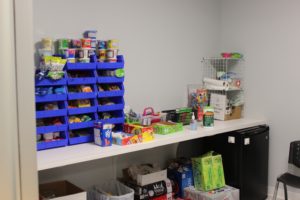
SEA School Store is operated by intermediate, high school and transition students, offering meaningful employment skills, which build on vocational and academic experiences for transitioning to the future. Students place orders and stock shelves, handle checkout, bag items, organize the store and interact with customers. Students, staff and visitors are able to shop and purchase store items offering practice for life skills of money management, problem solving, communication and social interaction.

Student Lunchroom is a place for students to come together socially, offering opportunities for socializing, playing games, reading and eating with friends. It also serves as an auditorium for school plays, parent nights, and staff and professional trainings.
Music Room allows students to explore and express creativity through music while promoting curriculum concepts and peer relationships.
Video Viewing Room offers parents, district representatives and visitors from the community a non-intrusive opportunity to observe students and SEA’s unique programming practices via cameras outfitted in classrooms, with support/supervision from SEA staff.
Wireless Communication Systems are utilized throughout the site, allowing SEA staff to communicate readily for support of student regulation, safety and programming.
“Our understanding of how language typically develops is based on a large body of research that details the stages of language development, from pre-linguistic stages through stages of conversational competence. This scientific evidence can be used to determine how to identify children’s strengths and challenges in the development of communication, language, and speech.”
Sima Gerber, 2015
Student events and activities are what helps build the school community allowing families and community partners to participate and see our students having fun!